Human trafficking often evokes images of people being smuggled across borders, but the reality is far closer to home. According to the United Nations Office on Drugs and Crime, most cases of trafficking happen within regions and even within domestic borders.
Trafficking for sexual exploitation can occur in various environments, including workplaces, where vulnerable individuals are coerced or manipulated into harmful situations. Human traffickers use many forms of coercion to control their victims and force them to perform acts for money under duress.
The risk of trafficking in the workplace is real, and employees and employers alike must remain vigilant. Being able to spot sex trafficking in workplace settings can make all the difference. Here’s how to recognize the signs and protect those at risk.
How Sex Trafficking Infiltrates the Workplace
Sex trafficking in the workplace refers to the exploitation of individuals for sexual activities within job settings, often hiding in plain sight. Human trafficking victims may be coerced through false promises, such as stable work or career opportunities.
Many are vulnerable due to limited education, lack of work experience, or unstable support systems, leaving them unable to seek safer job options. This exploitation is especially prevalent in high-risk industries, like hospitality, retail, and agriculture, where vulnerable individuals may be overlooked or undervalued.
The case of former Abercrombie CEO Mike Jeffries illustrates how instances of trafficking can occur even within respected circles. Allegations of trafficking committed by Jeffries reveal a disturbing example: from 2008 to 2015, he and his partner allegedly lured young men with the promise of modeling careers, only to exploit them in environments where they were pressured into sexual acts.
These instances remind us that trafficking can take place in professional settings, affecting potential victims who might otherwise go unnoticed.
Signs of Sex Trafficking in Workplaces
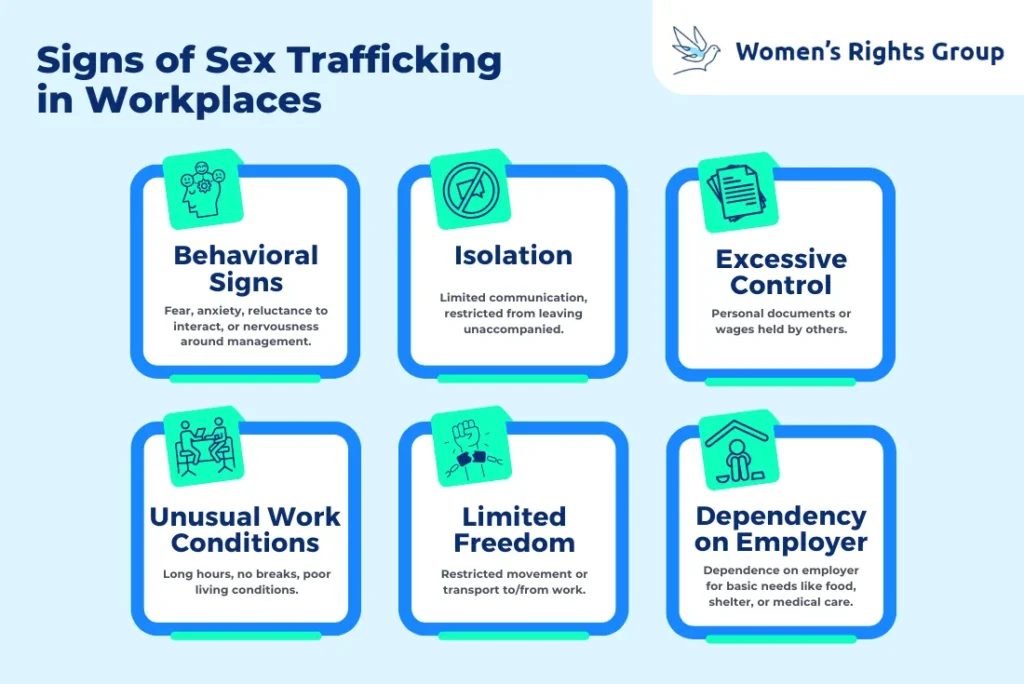
Recognizing the warning signs of trafficking situations is critical for employees and business owners alike. Below are common signs that may indicate trafficking in the workplace:
- Behavioral Indicators: Workers may show signs of fear, anxiety, or reluctance to interact with others. They may avoid eye contact, appear submissive, or seem excessively nervous around management.
- Isolation: Trafficking victims are often kept isolated, limiting their ability to communicate freely or seek help. They may be restricted from leaving the workplace unaccompanied.
- Excessive Control: Vulnerable workers may have their identification or documentation held by someone else or lack direct access to their wages.
- Unusual Work Conditions: Watch for workers with excessively long or odd hours, lack of breaks, or those who live in cramped or poor conditions provided by employers.
- Limited Freedom: Trafficking situations often involve restricted movement, such as being transported to and from work in a controlled manner or being forbidden from leaving the workplace independently.
- Dependency on Employer: Workers may display a strong dependency on their employer for basic needs, such as food, shelter, or even medical care, which can keep them trapped in exploitative situations.
What Employers and Employees Can Do
Employers can take an active role in the fight against trafficking by establishing clear anti-trafficking policies, providing awareness training, and ensuring compliance for businesses to create safe, informed environments. Implementing training on how to recognize and respond to signs of trafficking in persons is crucial in promoting a vigilant workplace culture.
Employees, on the other hand, should be encouraged to report any suspicious activities or potential signs of sex trafficking in the workplace, especially when mental health concerns or dependency patterns are involved. A safe and anonymous reporting process is essential to protect those who come forward.
Consulting a sex trafficking lawyer is also critical for any affected individuals. These professionals offer legal support and can guide victims through seeking justice. A compassionate and experienced legal team can help victims understand their rights and ensure they receive the support they need.
Protect the Workplace from Exploitation
Knowing the signs of sex trafficking in the workplace is essential for creating safe and respectful environments. We must remain vigilant, as trafficking can happen in any industry, often hiding in plain sight. High-profile cases, like those involving Mike Jeffries, the former Abercrombie CEO, remind us that abuse of power can play a significant role in these situations.
Raising awareness of sex trafficking is key to preventing such exploitation and ensuring that victims receive the support they deserve. Human trafficking is a serious issue, and the role of a sex trafficking lawyer is critical in providing legal support and services to victims.
If you suspect trafficking, it’s crucial to take action and report your concerns to the proper authorities. For those in need, we urge you to seek help from a trusted sex trafficking lawyer—call us today.